Is it worth it to self-publish a book in 2026?
Maybe it’s the fact that I went to college to study English, but I feel like most people—at one time or another—have talked about publishing a book.
I think people talk about it in the same way they say “I should start a band” or “I could do a podcast.” It’s something that seems very achievable and cool to have done—and it is! But achievable doesn’t mean easy.
While I do believe that everyone has a book or a story in them of some sort, that doesn’t mean that it’s worth it for every individual person to spend the time bringing that book to market.
So if you’re thinking of publishing a book now or in the future, here’s some things to consider before you start that journey.
Self-Publishing Vs. Traditional Publishing
I believe most people who picture writing a book picture traditional publishing. (Or, at least, a version of publishing closest to traditional.) Without getting too into the minutia of the differences here’s a VERY boiled down explanation:
In Traditional Publishing, all you need to do is write the book. In Self-Publishing, you need to write the book and also everything else (or, at least, be able to hire others to do the stuff you can’t).
If you’re looking to do traditional publishing, there’s one thing you need to be prepared for very early on: Rejection.
If you’ve ever had the experience of writing dozens or hundreds of unique cover letters and submitting them to employers only to never receive a serious interview, that is (statistically) what you can expect from traditional publishing.
That’s because, in traditional publishing, you’ll often have to get an agent before anything can happen. That agent will (hopefully) sell your book to an editor at a publishing house. Your agent will not be paid until they get an editor/publisher to agree to distribute your book. Both you and your agent will only get paid once this happens, which means that even if an agent agrees to represent you, that agent will give you changes they want to see made to your book to make it more compelling for an editor later on.
Later on, when you do get an editor, they will also likely have changes for you in hopes of making it easier to sell your book.
Sometimes, for compelling non-fiction, a publisher will be willing to pay in advance for a book, but that’s more if you’re a prominent public figure whose book people will immediately be interested in buying. If you have a really interesting life but no cultural footprint, you might have a fascinating and compelling memoir or biography, but don’t count on being paid for it before it’s written.
That is the broad strokes of traditional publishing.
Self-publishing is, in theory, a little bit faster, but the cost to you is a lot higher with no guarantee of a return.
To self-publish a book, you could—ostensibly—write a book and never look at or edit it and decide to publish it. You could hit the minimum requirements for one of the main publishing platforms out there (Barnes & Noble, Amazon, Kobo, IngramSparks, Draft-2-Digital, etc.), format your document to specifications, make and design your own cover and, boom! You’re a self-published author.
Obviously, doing everything fast and dirty like that is not ideal, so if you are thinking of self-publishing and want to know about how long that will take, keep reading.
How much time are you willing to dedicate?
As with any skill or task—especially for the first time—the number of hours you’re willing to spend on it is going to be the main factor to consider before seriously approaching the idea of monetizing it.
Self-publishing, in many regards, can be a lot faster than traditional publishing in that, if you’re a fast writer able to get your work cleaned up quickly, you could probably publish a new book every 3-6 months if you really wanted to. (Which is something that would be logistically difficult for most traditional publishers to do).
Simultaneously, self-publishing can also be a lot slower in that, not only are you doing the job of author, but you might also be the designer and illustrator as well. And if you’re not doing those other jobs, you’ll need to find a way to pay other people to do them, which will usually be faster, but still means you need to find a way to get that money first.
Speaking for myself, I am a very slow writer. I published a novel in 2022 and then published another in 2024. However, both of those books had completed drafts already when I started considering self-publishing them, thus, a lot of the process was getting other readers to share their opinions on the book and then making adjustments based on their feedback before hiring editors, illustrators, designers, etc.
I’m currently in the process of working on another book that I hope to self-publish and, while that won’t exactly be from scratch, I anticipate that it’ll take me 3 years total to get the book to a state where I’m comfortable publishing it. That’s me writing fiction while also holding down a day job; while there are plenty of people who can write and edit faster than that, I think there are many people (especially those new to the scene) who will take longer.
Thus, I think it’s worth considering if you’re willing to spend 3 years or more working on the same project. If not, it might be worth considering holding off on your book for the time being, or else planning to write it very slowly over a number of years.
As yourself, “Why do I want to get published?”
As beautiful as the notion of Art for Art’s sake is, that’s probably not going to be a good enough reason for a lot of people.
Don’t get me wrong, there are many people who have a story to tell and want to share it. Whether it is profitable or not is almost incidental. The main concern is getting everything you feel needs being said on the page.
I think that if that is the aim, then you need to know going in that if you never look for more beyond that, you are not going to make any money and you should find a way to be okay with that. I’ve learned the lesson again and again that just because you’ve written a book doesn’t mean people will by it. If you write a fiction book you MUST find a way to get it in front of people and demonstrate to them why it is worth their time.
The simple reality is, if you want to make money off of a book you will actively have to try to sell it. And even then, you might not be able to break even if you self-publish. (Whereas, in traditional publishing you will at least get an advance—a paycheck for expected sales, and you won’t see more until the amount you make exceeds that advance, which sometimes never happens.)
That said, writing a book that isn’t itself profitable can have its advantages if other facets of your job/business are potentially enhanced by having a published book.
Let me explain.
There’s a podcast I’ve been listening a lot to called Publish & Prosper, beyond having generally helpful advice, they point pout that a book can be helpful—non-fiction especially—as a marketing tool.
If you are, say—a chef and you’re running your own restaurant, it might be worth your time to publish a cookbook. This gives people who came to your restaurant and enjoyed your meal a chance to make another purchase if they liked your food; people might also see your book and decide to check out your restaurant. Furthermore, the existence of the cookbook—if it is of quality—emphasizes your authority as a person who knows food.
And it wouldn’t have to be a cookbook—perhaps you have an interesting story behind how you got into cooking or what led you to becoming a chef. A memoir or biography might be a worthwhile product as well, providing people who eat your food a chance to feel like they know the person who makes it better, and—if people happen to find the book first—giving them the ability to experience the food from the person they just read about.
Conclusion
If you know how you want to publish (self vs. traditional), if you’re willing to spend multiple years working on the same book extensively, and if you feel your life will enriched in one sense or another by the end product, I think you should absolutely look to write and publish a book!
Furthermore, it’s also entirely possible to just decide to write for fun! You could write a book and show it just to your friends or family or no one and never get it published and, guess what, you still wrote a whole book and didn’t have to fret and hand wring for years.
In any case, if you found this helpful, you can check out a few posts where I offer some Other Publishing Advice:
*****
Hey! You finished my latest blog post. If you enjoyed this and want to keep up to date, consider scrolling to the bottom of this page and signing up for e-mail updates so you can have stuff like this sent right to your inbox.
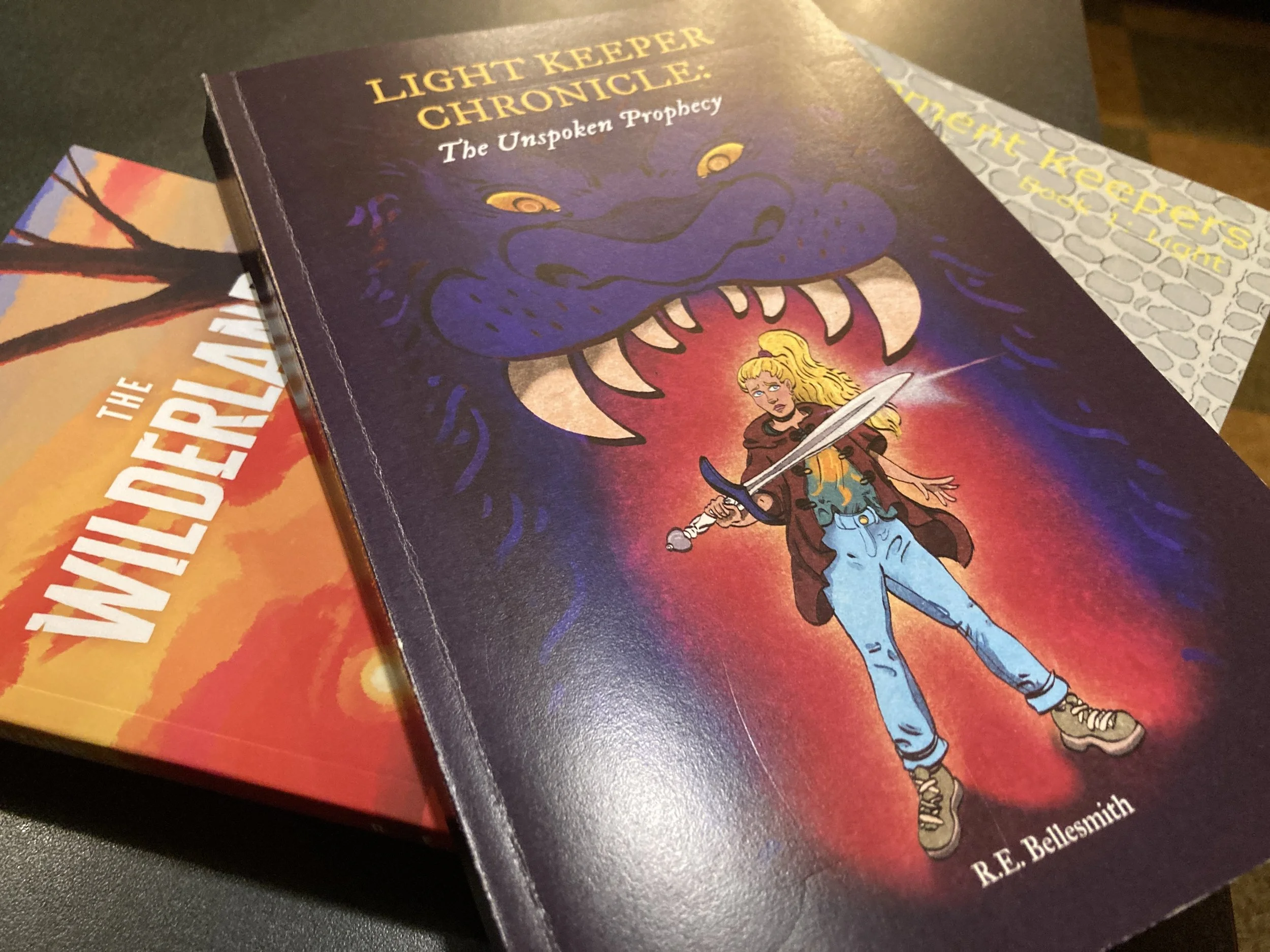
The Wilderlands is available for physical purchase now from Barnes & Noble and Amazon or wherever you read ebooks. The audiobook is also out now on most major platforms.
My YA fantasy book, Light Keeper Chronicle: The Unspoken Prophecy can be ordered off of Amazon, Barnes & Noble, Schuler Books, requested at your local bookstore, or found on most major ebook marketplaces.